
- Published on
Kraken Robotics: Analyzing the Deep/Tech Moat
- Authors

- Name
- NenyaCat
- @nenyacat
The naval strategy of the Western alliance, centered around the US, Australia, and the UK (AUKUS), is rapidly shifting from "Manned Submarines" to Unmanned Autonomous Systems. Behind this massive current, Kraken Robotics (hereafter Kraken) is solidifying its position not as a platform manufacturer, but as an Exclusive Supplier of Mission-Critical Subsystems.
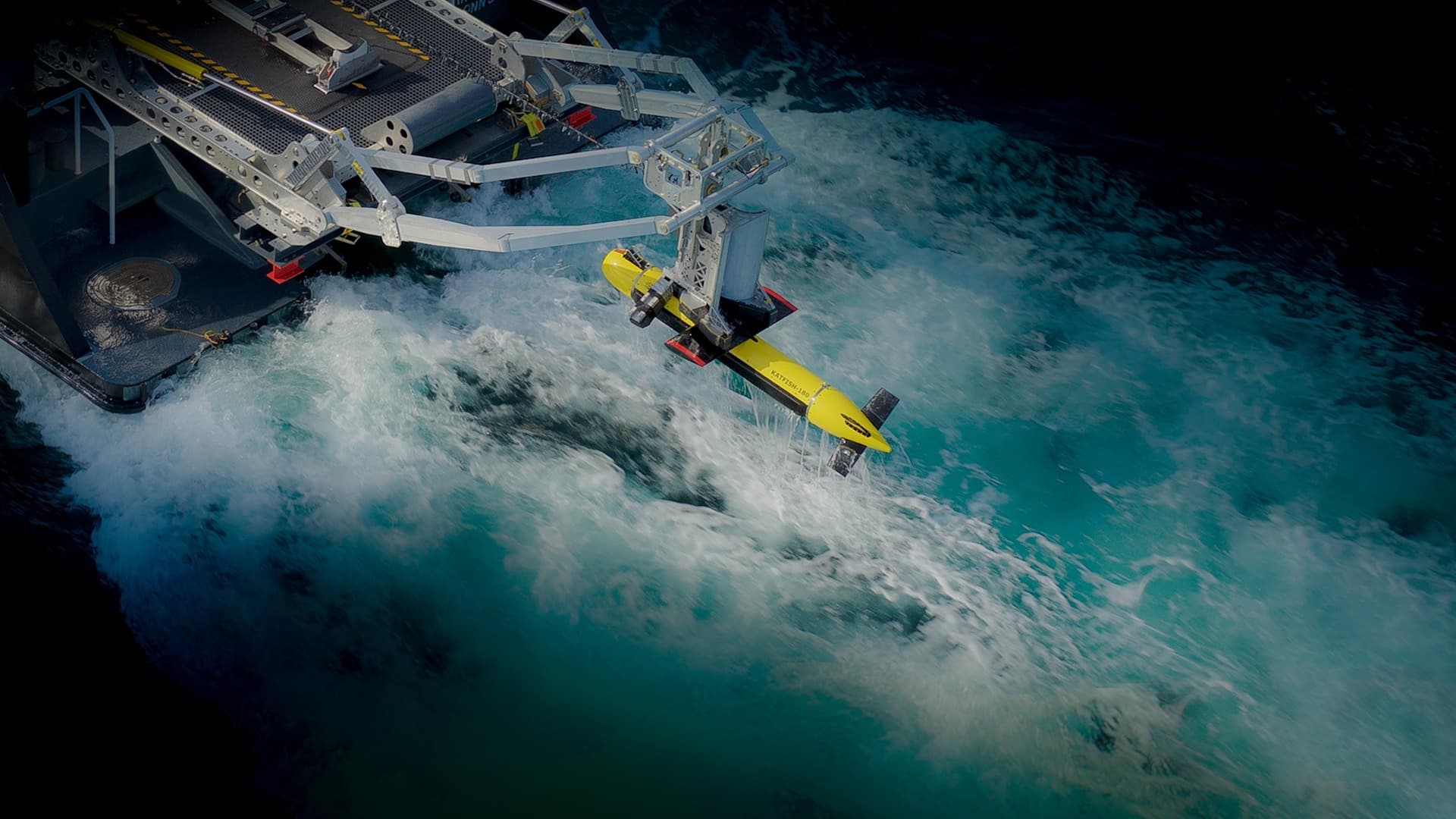
In this article, we analyze Kraken's technical moat, partnership status, and 2025 financial outlook based on concrete figures and facts.
Technical Moat: Why Kraken?
For Unmanned Underwater Vehicles (UUVs) to be deployed in actual operations, they must overcome two physical limitations: "How long can it endure? (Energy)" and "How accurately can it see? (Sensing)". Kraken has secured a clear technical advantage in these two areas compared to its competitors.
SeaPower™: The Deep-Sea Energy Solution
Traditional deep-sea batteries required heavy and expensive titanium pressure vessels to withstand water pressure, or used oil-filled pressure compensation methods. Kraken's SeaPower™ is different.
| Feature | Traditional Battery (Lead-Acid/Li-ion) | Kraken SeaPower™ |
|---|---|---|
| Structure | Pressure Vessel Required (Heavy) | Pressure-Neutral (Polymer Encapsulation) |
| Energy Density | Low (Includes vessel weight) | Max 260 Wh/l (High Density) |
| Depth Rating | Limited (Dependent on vessel specs) | Standard 6,000m (Max 10,000m) |
| Maintenance | Complex (Risk of oil leakage) | Simple (Modular replacement) |
Kraken encapsulates battery cells directly with a special polymer, allowing them to withstand 6,000m pressure without a separate pressure vessel. This drastically reduces the weight of the UUV, thereby extending mission endurance.
AquaPix®: 3cm Ultra-High Resolution Sonar
Synthetic Aperture Sonar (SAS) is Kraken's foundational and core technology. While the resolution of traditional Side Scan Sonar degrades rapidly with distance, SAS maintains a constant resolution regardless of range through advanced signal processing.
- Resolution: Range-independent 3cm x 3cm (Up to 1.9cm x 2.1cm with Ultra HD SW)
- Area Coverage Rate (ACR): 4~5.3 km²/h (2-3x faster than traditional sonar)
- Application: deployable on both manned/unmanned platforms (HII REMUS, Anduril Dive-LD, etc.)
Partnership Ecosystem: Who are they selling to?
Kraken's customers are global "Tier 1" defense contractors. Kraken's components are "spec-in" (integrated into the specifications) for the large-scale projects these giants win.
Anduril Industries (Strategic Partner)
Anduril, often called the "Tesla of Defense," is Kraken's most critical partner.
- Dive-LD (Large Displacement): Anduril's long-range autonomous underwater vehicle. Kraken's batteries, sonar, thrusters, and other core components are integrated as a package.
- Ghost Shark (XL-AUV): A massive project worth AUD $1.7 Billion (approx. USD $1.12B) signed between the Royal Australian Navy and Anduril. Under this 5-year contract signed in 2025, Kraken supplies large-format battery modules. Initial prototypes (3 units) were already delivered in 2024, with production models scheduled for delivery starting in 2026.
HII (Huntington Ingalls Industries)
Kraken also maintains a deep relationship with HII, a major UUV supplier to the US Navy.
- REMUS Series: Kraken sonar is mounted on the REMUS series, the most widely sold UUV globally.
- New Integration: Kraken's MINSAS sonar is offered as a standard payload option for the latest models, REMUS 620 and MK18 Mod 2. Starting with an initial integration order of $1M in 2023, volumes are expanding.
2025 Financial Guidance
Kraken is not just an R&D company. It has already achieved profitability and is showing a steep growth curve (J-Curve).
Guidance Summary (2025 Outlook)
- Revenue: $120 Million ~ $135 Million (Approx. +40% growth vs 2024)
- EBITDA: $26 Million ~ $34 Million (Approx. +45% growth vs 2024)
- CAPEX: $20M ~ $21M (New battery factory expansion, etc.)
Qualitative Shift in Revenue
The proportion of RaaS (Robotics as a Service) and service revenue is increasing relative to simple product sales. This generates recurring revenue rather than one-time margins, acting as a driving force to maintain gross margins in the 40-50% range.
Risk Factors
Risks that must be considered before investing.
- Geopolitical Dependence: The majority of revenue comes from defense and security budgets. Growth could slow if global tensions ease.
- Supply Chain Issues: Risks regarding raw material supply (battery cells, etc.) or delays in capacity expansion.
- Intensifying Competition: The possibility of traditional defense firms like Kongsberg or Thales developing their own in-house technologies cannot be ruled out.
Conclusion: Top-down Perspective
The increase in global defense budgets, specifically the Maritime Unmanned Budget ($5.3B+), is an irresistible Megatrend. In this flow, Kraken Robotics is the most tangible beneficiary, supplying "components that are needed regardless of who wins."
Whenever Anduril's Ghost Shark patrols the Australian coast, or a NATO navy scans for mines with REMUS, Kraken generates revenue.
This article is for informational purposes only and does not constitute investment advice. Investment decisions should be made carefully based on your own judgment.