
- Published on
Coupang: Why the "Convenience Moat" is Stronger Than the Data Scandal
- Authors

- Name
- NenyaCat
- @nenyacat
As someone living in Korea, let’s be honest: Coupang isn’t just an app; it’s infrastructure. It’s as essential as water or electricity in my daily life here.
Recently, the news has been flooded with reports about Coupang’s customer data handling. People are angry, politicians are talking, and the stock price is wobbling. But as a long-time user and an investor, I’m looking at this with a very cold, pragmatic eye.
Here is why I believe this "crisis" is likely temporary noise. For millions of users like me, the company's economic moat is much deeper and more tangible than what the headlines suggest.
1. Data Breach Fatigue: "My Info is Public Domain Anyway"
This might sound cynical, but let’s get real. Data breaches are not new. Just this year alone, major Korean entities like SKT (telecom) and Shinhan Card—along with countless others—have had security issues.
At this point, I’ve accepted that my personal information is practically public domain. Whether it's a US company or a Korean company, they all get hacked eventually. The news breaks, people get mad for a week, and then... silence. We all go back to using our phones and credit cards because we have to.
To me, this news doesn't change my life. It’s just another Tuesday.
2. A Developer’s Honest Confession: Security vs. Speed
I’ve worked as a software developer for about 8 years. I didn't work at massive tech giants like Coupang or Naver, but I’ve seen enough to know the industry's dirty secret: Security is rarely the #1 priority.
In most companies, the order of priority is usually:
- New Features (What brings in money)
- Speed/Performance (What keeps users happy)
- Security (The invisible chore)
Unless you are a bank, security is often treated as "technical debt" to be fixed later. Developers are pushed to ship code fast, and security checks are often seen as bottlenecks.
So, am I surprised that Coupang—a company obsessed with "Rocket Speed"—had a data issue? Not really. This is simply a structural reality of the IT industry. It’s a problem that needs fixing, but it doesn’t surprise me.
3. The "Convenience" Moat: Living the Founder's Vision
I am fully immersed in their ecosystem: Coupang (Shopping), Coupang Eats (Food Delivery), and Coupang Play (Streaming).
To be honest, I could live without the food delivery or the TV shows. Those are just nice bonuses. But the core shopping experience? That is non-negotiable.
As a busy office worker, the last thing I want to do after work is trek to a grocery store in freezing winters, pouring rain, or scorching heat just to buy eggs and milk. Coupang saves me that physical trip and gives me back my evening. And I get all of this—dawn delivery, free returns, and streaming—for less than 10,000 KRW (about $7) a month.
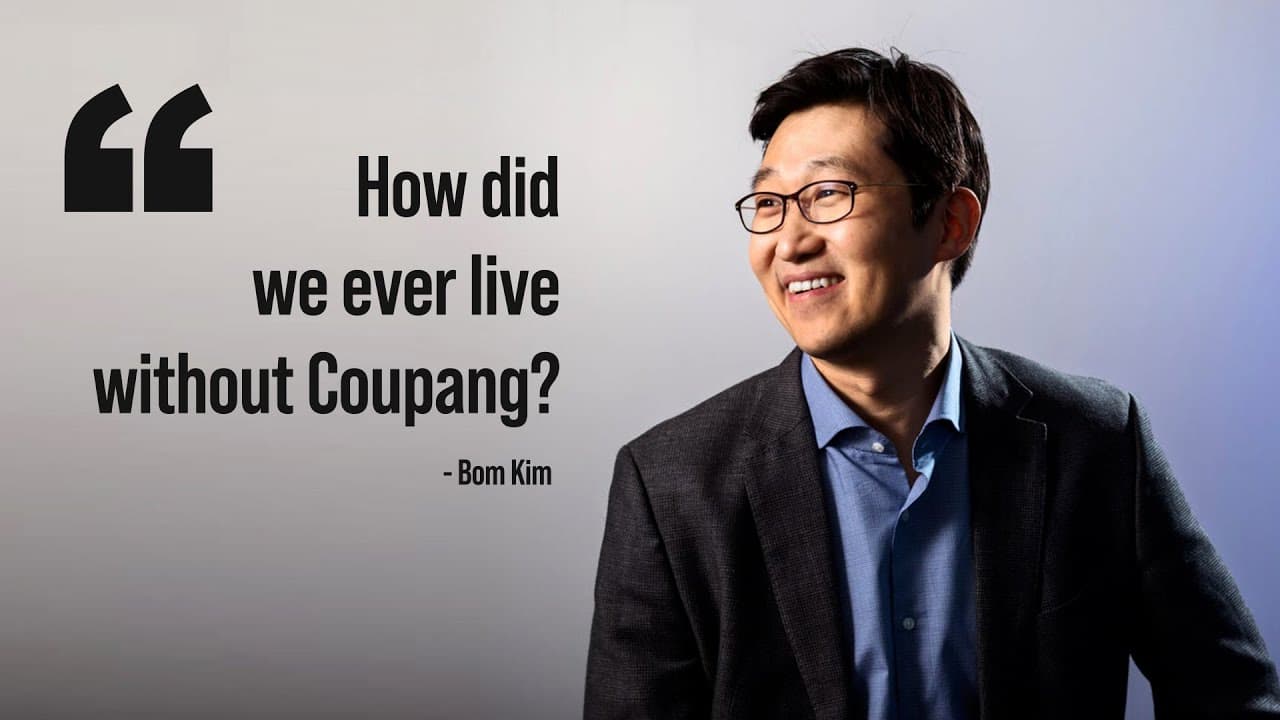
This brings me to Bom Kim’s famous mission statement. The founder of Coupang always said he wanted to create a world where customers ask: "How did I ever live without Coupang?"
For me, that is no longer a marketing slogan. It is the literal truth. Going back to a life before Coupang—waiting 3 days for a package, paying for shipping, driving to the store—feels like going back to the Stone Age. There is simply no viable alternative that offers this level of seamless integration. The moat is real because the "life without Coupang" is too inconvenient to imagine.
4. The Lesson from the "Boycott Japan" Movement
This situation reminds me of the "No Japan" boycott movement in Korea a few years ago.
Did it have a temporary effect? Yes, absolutely. Sales dipped, and social pressure was intense. But time revealed the truth: The economic moats of Japanese industries remained completely unchanged.
Why? Because for certain sectors—like specialized tech materials, cameras, or gaming consoles like Nintendo and PlayStation—there simply were no substitutes. You can boycott a generic beer, but you cannot boycott an irreplaceable technology or a unique cultural product.
The dust settled, the emotions faded, and the market share recovered because the structural need for those products never disappeared.
Coupang is in the exact same position today. The anger is real, and the dip is real. But just like before, emotions will eventually yield to necessity. You can boycott a brand for a month, but you cannot boycott an ecosystem that sustains your daily life forever.
5. Conclusion: Crisis or Discount?
I’m not a lawyer. I don’t care about the complex differences between US SEC regulations and Korean laws. That’s for the legal teams to figure out.
I have no interest in debating who is "good" or "bad." I am simply calculating the convenience and practical benefits in my own life.
As a user, I will keep using Coupang because I’m lazy and busy. As an investor, the logic is simple: If the fundamentals (user retention) remain unchanged, but the price (stock) drops due to fear, that gap is what we call an "Opportunity."
While everyone else is busy criticizing their morality, I’m busy calculating if this is the right entry point.
Disclaimer: I am not a financial advisor. I am just a developer who likes cats and stocks. Do your own research.