
- Published on
The Return of Long-Duration Treasuries: A Deep Dive into $TLT for 2026
- Authors

- Name
- NenyaCat
- @nenyacat
Two Years of Pain, One Inflection Point
2023 and 2024 were brutal for long-duration Treasury investors. The iShares 20+ Year Treasury Bond ETF ($TLT) posted an -8.05% loss in 2024 alone. The Fed's aggressive rate hikes, inflation fears, and fiscal deficit anxieties dominated market sentiment. Many investors declared "bonds are dead" and moved on.
Fast forward to December 2025, and the landscape is quietly shifting. The U.S. 10-year Treasury yield hovers around 4.14%, while the Fed has delivered three consecutive rate cuts, bringing the federal funds rate to 3.50%~3.75%. Year-to-date 2025, $TLT has rebounded approximately 5%, signaling a potential reversal.
This analysis examines why U.S. long-duration Treasuries—specifically $TLT—could represent the most attractive contrarian opportunity in 2026. Not based on wishful thinking, but on hard data: Fed policy trajectory, inflation structure, AI's economic impact, and market valuations.
Part 1. Structural Shifts in the Macro Environment
1.1 The Fed's Easing Cycle: An Unfinished Journey
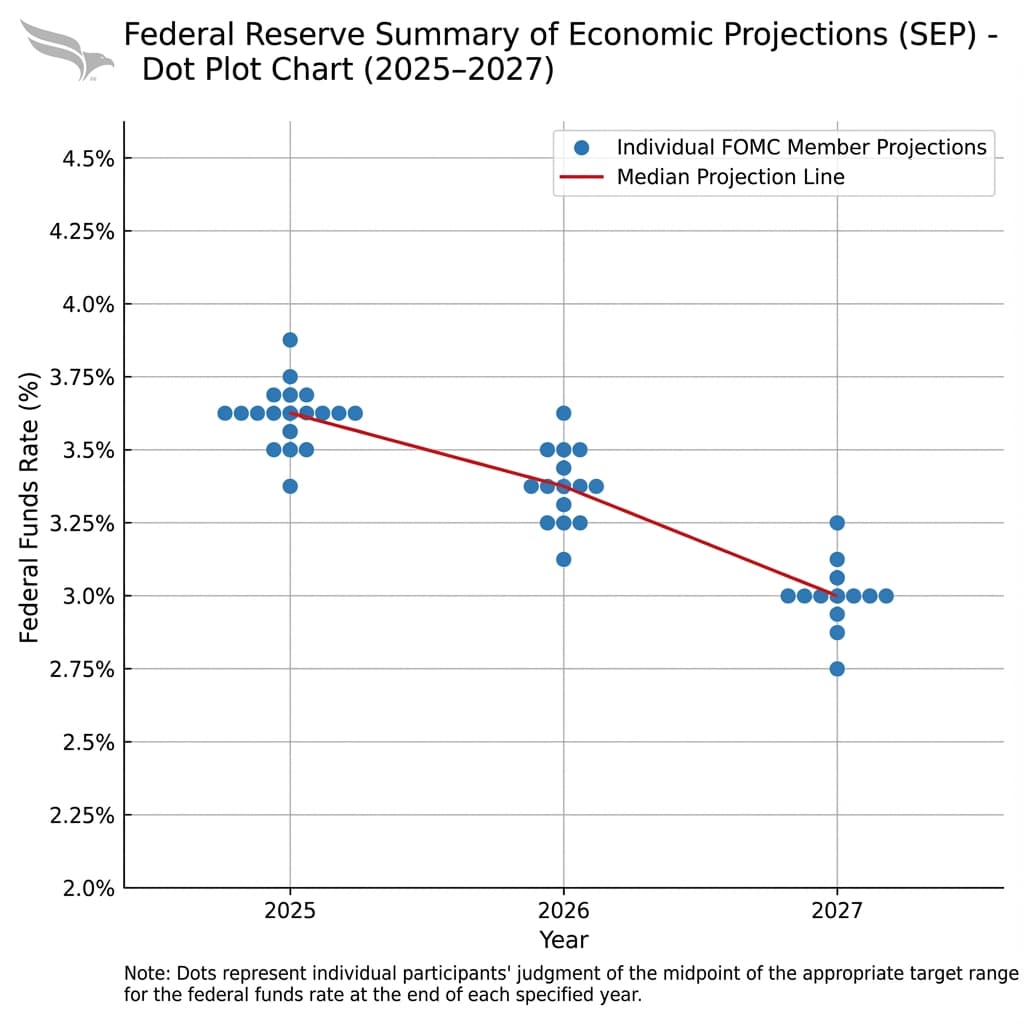
The December 2025 FOMC meeting's dot plot sends a clear message: the Fed plans at least one more rate cut in 2026, with the median projection placing the federal funds rate at 3.25%~3.5% by year-end 2026.
Fed Dot Plot: 2025-2027 Rate Projections
The distribution is notable: FOMC members are split—4 expect no cuts, 4 see one cut, another 4 anticipate two cuts in 2026. While opinions vary, the critical point is this: not a single member expects rate hikes.
The Fed's rationale for cutting is twofold. First, inflation is moving toward the 2% target. PCE inflation projections stand at 2.9% for 2025 and 2.4% for 2026. Second, the Fed's priority has shifted from "price stability" to "defending maximum employment."
1.2 Labor Market Cracks and the Fed's Dilemma
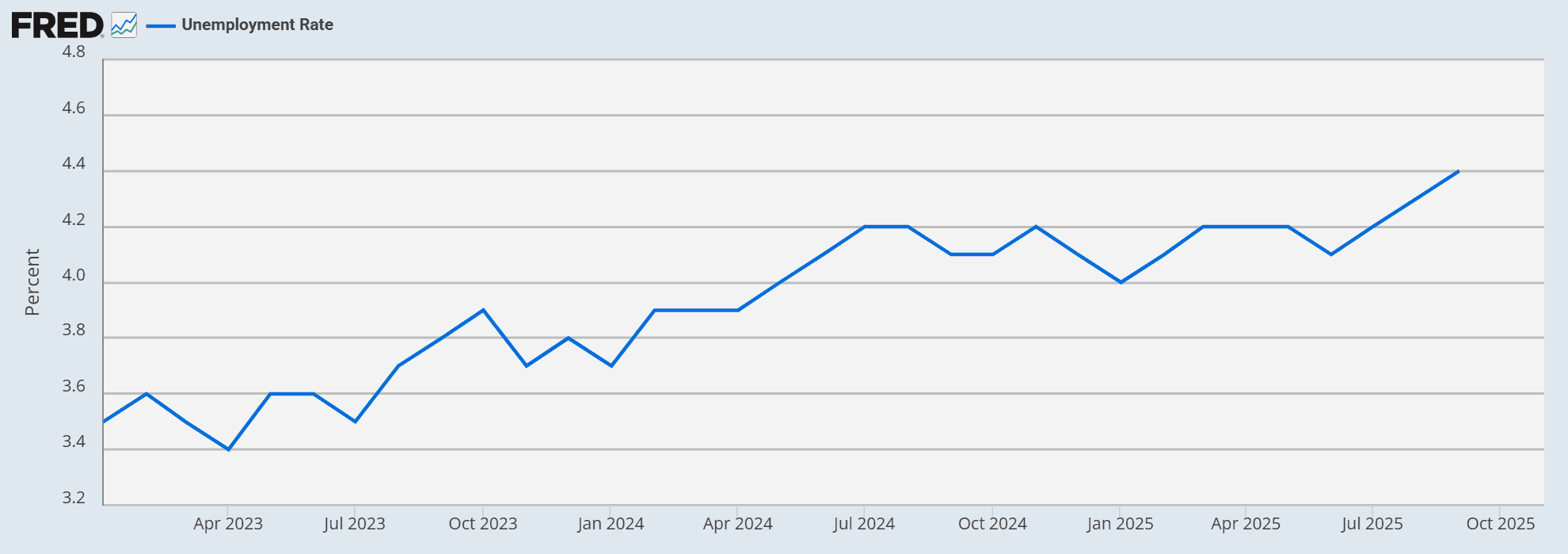
Unemployment is projected at 4.5% in 2025 and 4.4% in 2026. On the surface, these are near-full employment numbers. But qualitatively, the signals are different. AI-driven job displacement and reduced immigration are creating simultaneously tight and fragile labor conditions.
U.S. Unemployment Rate Trend (Source: FRED)
Fed Chair Jerome Powell made it explicit in his recent press conference: "defending the labor market is our top priority." This means any uptick in unemployment could trigger faster and deeper cuts than markets currently anticipate.
1.3 Structurally Stable Inflation
The fear that "inflation will surge again" is the biggest deterrent for bond investors. But market-based indicators tell a different story.
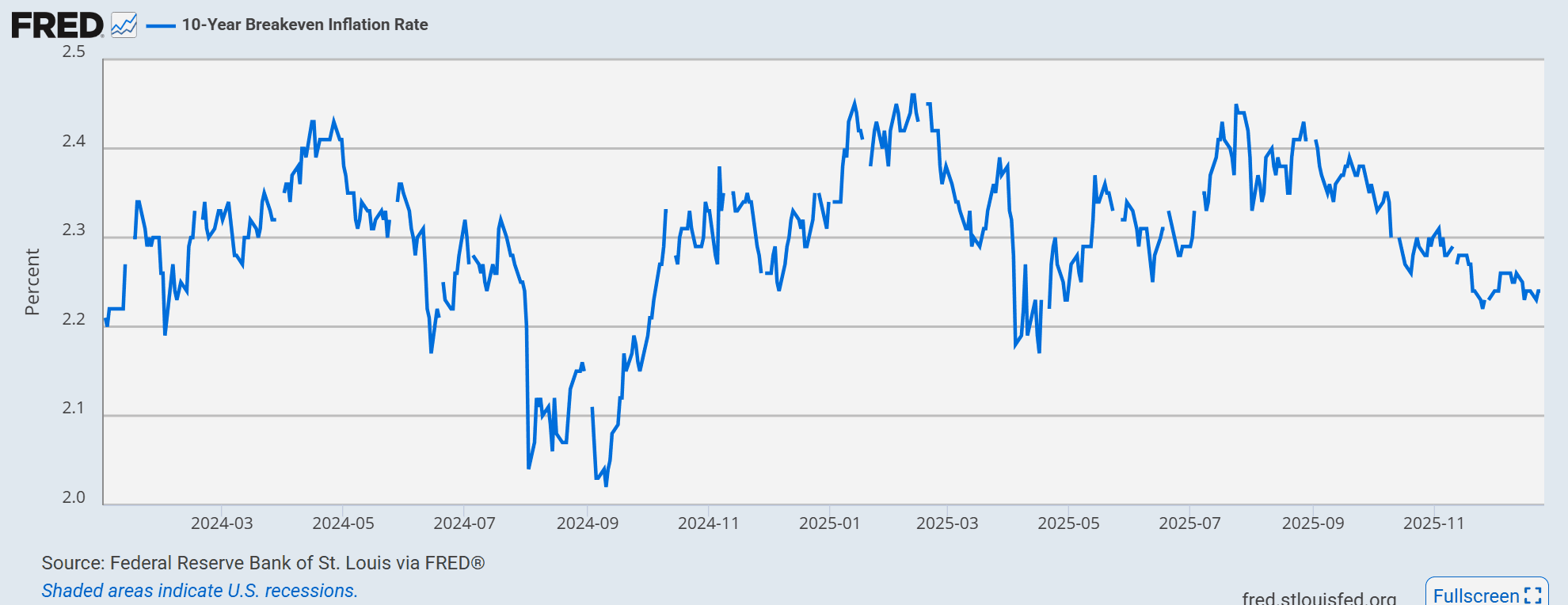
The 10-year Breakeven Inflation Rate (BEI)—which reflects what bond investors expect for average inflation over the next decade—is moving below 2.5% as of December 2025.
10-Year Breakeven Inflation Rate (BEI) Trend (Source: FRED)
This suggests the "fiscal blowout causes inflation surge" scenario is not being priced into bonds. While tariffs or trade policy changes could cause one-time price shocks, the market consensus is that these won't spiral into sustained wage-price inflation.
Part 2. The AI Revolution and Deflationary Pressure
2.1 The Economics of Productivity Revolution
2025 may be remembered as the year AI truly integrated into the economy. The IMF projects AI will add 0.5% to annual GDP growth between 2025~2030. The Penn Wharton Budget Model estimates AI will contribute 0.09%p to Total Factor Productivity (TFP) growth in 2027, rising to 0.2%p by the early 2030s.
Productivity gains are inherently deflationary. Producing more output with the same inputs means lower unit costs. Historically, technological innovation has been a powerful force for lower prices. The 1990s IT revolution created a 'Goldilocks' environment where economic growth and low inflation coexisted.
2.2 AI's Dual Forces: Energy Demand vs. Cost Savings
AI's economic impact is complex. On one hand, data centers' massive power consumption creates upward pressure on energy prices. On the other, AI drives cost reductions through logistics optimization, inventory efficiency, and labor savings.
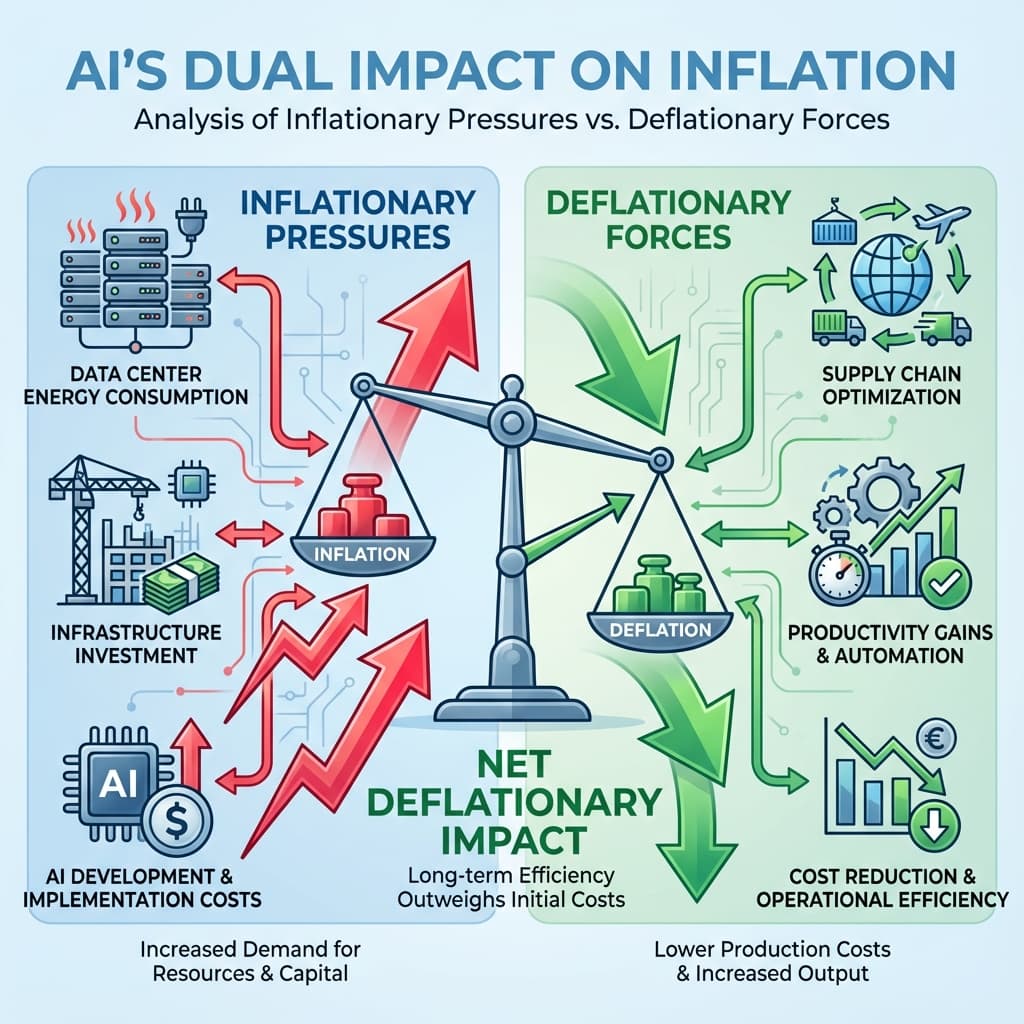
AI's Dual Impact on Inflation
The net effect likely tilts deflationary over time. This is favorable for bond investors. If the economy grows without inflation rising, real rates stay elevated, making bonds more attractive.
Part 3. The Fiscal Deficit Paradox
3.1 The Truth About $38 Trillion in Debt
U.S. federal debt stands at approximately $38 trillion as of year-end 2025. The FY2026 deficit is projected at $1.8 trillion, with roughly $2 trillion annual deficits expected over the next decade. This is fact—an undeniable structural issue.
However, the simple logic "massive deficit = soaring rates" is wrong. Here's why:
First, unmatched liquidity in the Treasury market. The U.S. Treasury market trades $600 billion daily—the deepest, most liquid market in the world. No country, no asset can replace it. As long as China and the EU fail to provide credible alternatives, structural demand for U.S. Treasuries persists.
Second, Treasury's strategic issuance management. The Treasury is minimizing long-duration issuance, funding primarily through T-Bills. This is a deliberate strategy to ease upward pressure on long-term rates and manage refinancing risk. Net issuance of 10-year and 30-year bonds hasn't surged as much as feared.
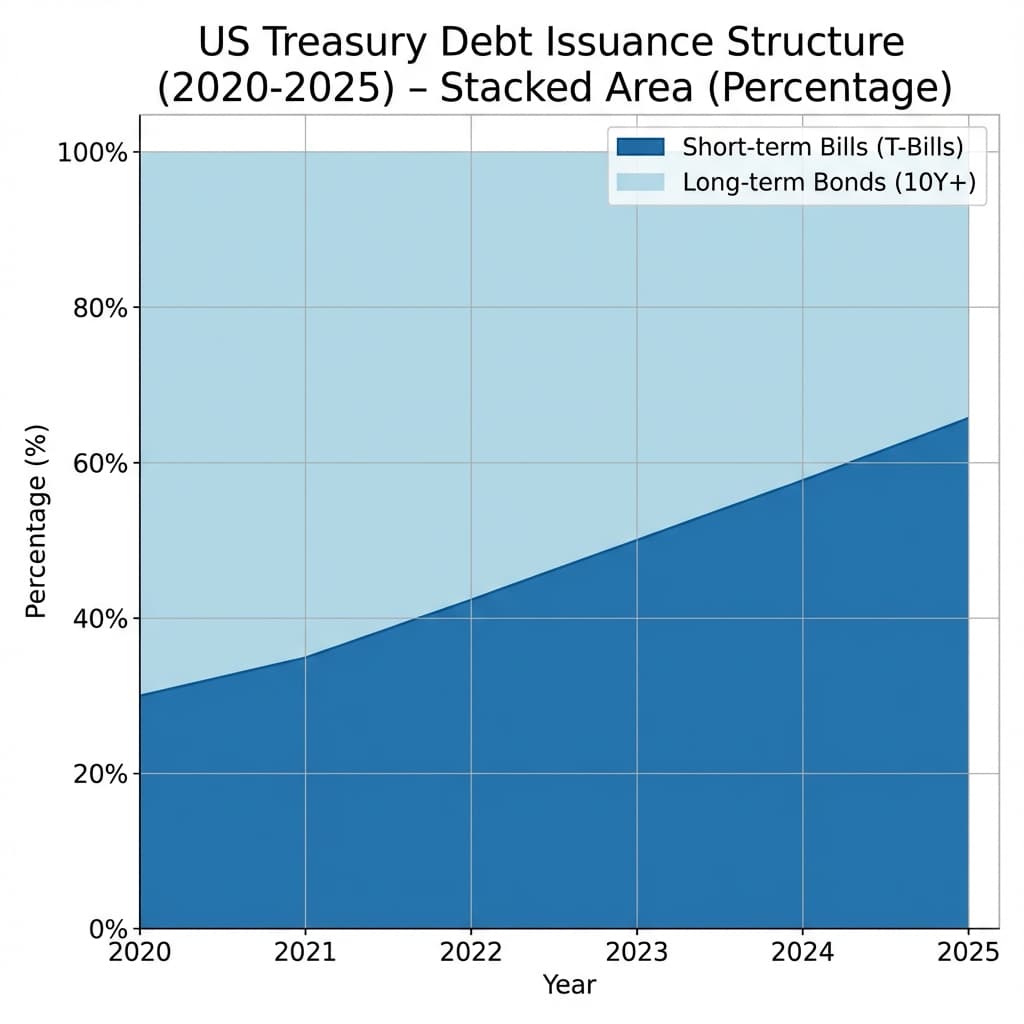
U.S. Treasury Issuance Structure: Increasing Bill Share
Third, strong recent auction results. H2 2025 Treasury auctions showed solid Bid-to-Cover Ratios, with robust demand from Indirect Bidders (primarily foreign central banks). The "demand disappearance" scenario hasn't materialized.
3.2 Bond Market Liquidity: Stress and Recovery
In April 2025, around tariff announcements, bond market liquidity temporarily deteriorated. Bid-ask spreads widened and order book depth thinned. But this was short-lived—by summer, liquidity recovered to early-2022 levels.
Dealer capacity constraints are real. However, the SEC is mandating centralized cash clearing by year-end 2025 and repo clearing by June 2026, strengthening market resilience.
Part 4. Understanding $TLT's Investment Characteristics
4.1 Duration: A Double-Edged Sword
$TLT invests in U.S. Treasuries with maturities of 20+ years. As of December 2025, key metrics are:
- Effective Duration: 15.56 years
- Weighted Average Maturity: 25.86 years
- 30-Day SEC Yield: 4.75%
- Convexity: 3.39
Duration of 15.56 years means that if rates drop 1%, $TLT's price rises approximately 15.56%. Conversely, a 1% rate increase means a 15.56% decline.
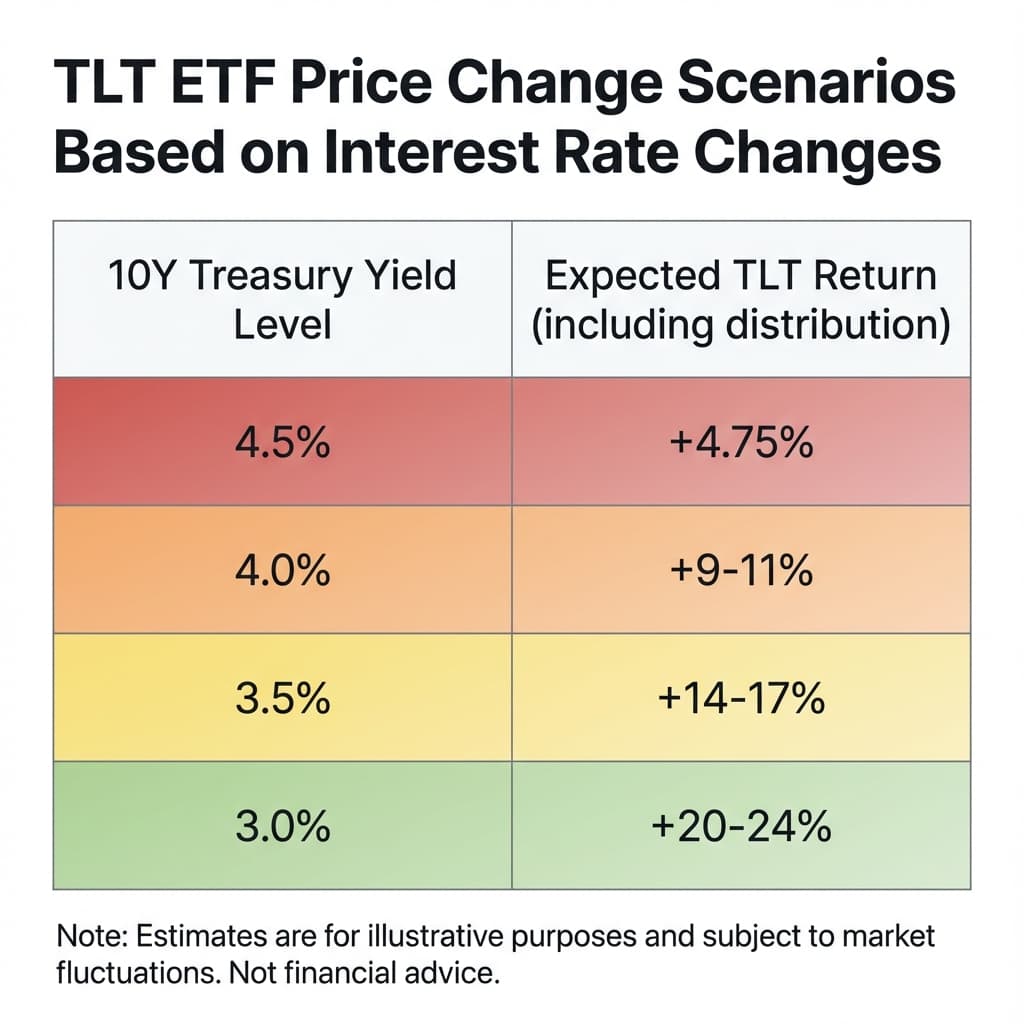
$TLT Expected Returns by Rate Scenario
This means high rate sensitivity—but when you have conviction on direction, it provides powerful leverage. If the 10-year yield drops from the current 4.14% to a target of 3.5%~3.8%, $TLT could deliver 10~15% capital gains.
4.2 The Magic of Convexity
Convexity measures how duration changes with rate movements. $TLT's convexity of 3.39 is positive, meaning "as rates fall, price appreciation accelerates."
For example:
- Rate -0.5%: ~+8% return
- Rate -1.0%: ~+17% return (linear would be 16%)
- Rate -1.5%: ~+27% return
Convexity is a bond investor's friend. While stocks have symmetric two-way risk, long-duration bonds have asymmetric payoffs: downside is capped, upside accelerates.
Part 5. Valuation: Stocks vs. Bonds
5.1 Stock Market Overheating Signals
As of December 2025, the S&P 500's Shiller CAPE Ratio stands at 40.74—historically extreme.
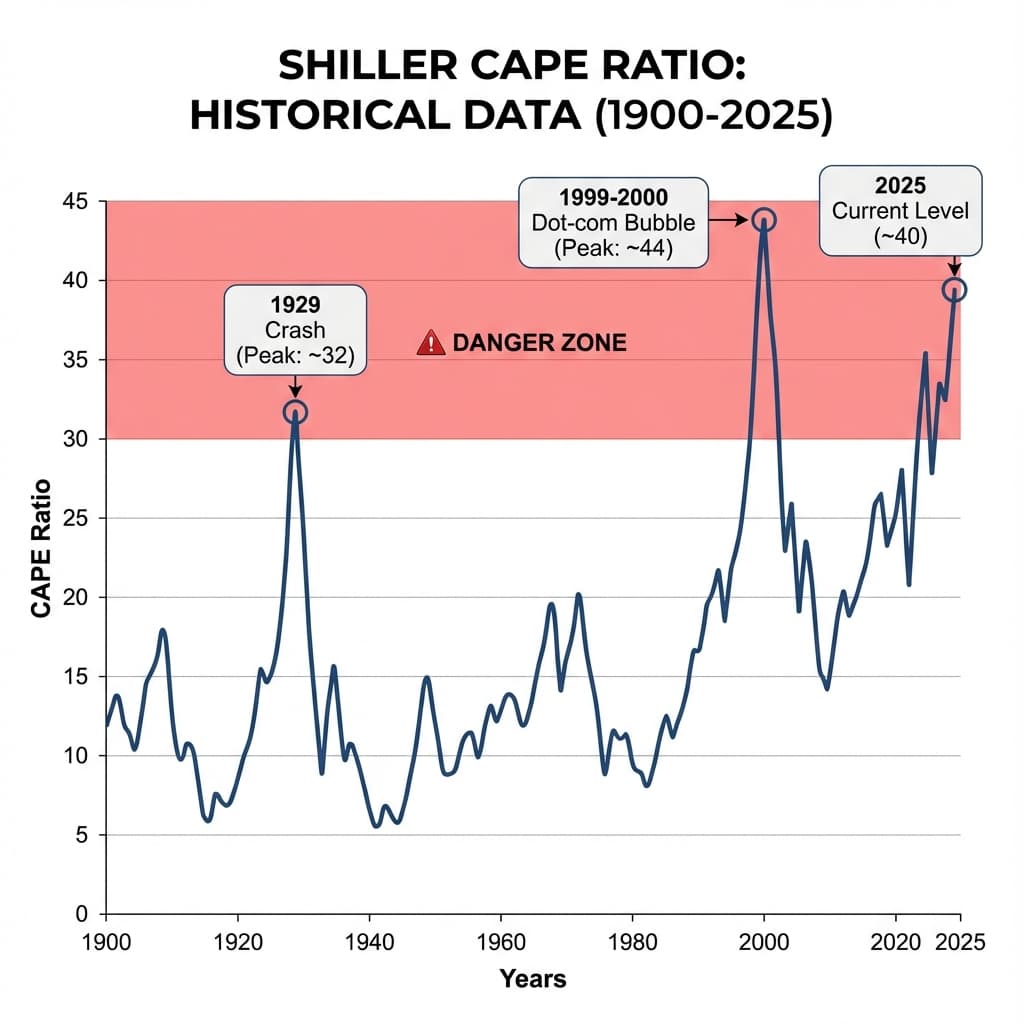
Shiller CAPE Ratio Historical Trend: Currently at All-Time Highs
The CAPE has exceeded 40 only twice in history:
- 1999 Dot-com Bubble (peak: 44.20)
- 2025 Current (40.74)
Even before the 1929 Great Depression, CAPE was only 32.56. Today's level is significantly higher.
When CAPE is at 40, historical real returns over the next 10 years have averaged 0~3% annually. In other words, the stock market may have already priced in the next decade's gains.
5.2 Bonds' Relative Attractiveness
The current 10-year Treasury yield of 4.14% is significantly higher than the S&P 500's Earnings Yield (inverse of P/E, approximately 2.5%). This is the opposite of the past 20-year average, when Earnings Yield typically exceeded Treasury yields.
From a risk premium perspective, bonds are relatively attractive. The case for taking equity risk has weakened.
Part 6. Risk Scenarios and Defense Lines
6.1 Bear Steepening Risk
The biggest risk is a "bear steepening" scenario where short-term rates fall but long-term rates hold or rise. This could occur if:
- Inflation gets stuck at 3% (sticky inflation)
- Fiscal credibility crisis emerges
- Foreign central banks accelerate Treasury selling
Some analyses suggest 10-year yields could rise to 4.6%~5.0% in this scenario. In that case, $TLT could fall an additional 10~15%.
6.2 The Possibility of Yield Curve Control (YCC)
But this extreme scenario has a "safety valve": the potential for Fed Yield Curve Control (YCC).
The current administration and Treasury are unlikely to tolerate 10-year yields persistently above 4.5~5.0%. The reasons are clear:
- Mortgage rate surge → housing market collapse
- Corporate borrowing cost spike → investment freeze
- Government interest costs explode → fiscal crisis accelerates
YCC—used by the Bank of Japan in 2020 and by the Fed during WWII—involves the Fed setting a yield ceiling and promising unlimited bond purchases to maintain it.
If YCC is implemented, it's extremely favorable for long-duration bond investors. Upside risk is capped, but downside remains open—an asymmetric structure.
6.3 Credit Rating Downgrade Risk
There's a possibility the U.S. could be further downgraded from AAA (S&P currently rates it AA+). However, historically, even the first downgrade in 2011 saw Treasury yields fall. The "absence of safe assets" paradoxically increased demand for U.S. debt.
Part 7. Investment Strategy Framework
7.1 Income Strategy: Locking in Yield
$TLT's current 30-day SEC Yield is 4.75%. Even excluding capital gains, you can earn 4.75% annually in distributions. If rates eventually return to the 2~3% range, today's 4.75% yield could be your last chance to "lock in" this level.
Suitable for:
- Pre-retirees: Investors needing stable cash flow
- Conservative allocators: Those reducing equity exposure
7.2 Capital Gain Strategy: Timing Play
If rates fall from 4.14% to 3.5%, expect ~10% capital gains. If they reach 3.0%, expect ~15~18% gains.
Scenario Analysis:
| 2026 Year-End 10Y Yield | $TLT Expected Return (incl. distributions) |
|---|---|
| 4.5% (status quo) | +4.75% (distributions only) |
| 4.0% | +9~11% |
| 3.5% | +14~17% |
| 3.0% | +20~24% |
Suitable for:
- Directional bettors: Aggressive investors with rate-cut conviction
- Equity hedgers: Those preparing for recession scenarios
7.3 Hedge Strategy: Portfolio Defense
During the Global Financial Crisis (March 2008~March 2009), when the S&P 500 fell -50%, $TLT rose +33%.
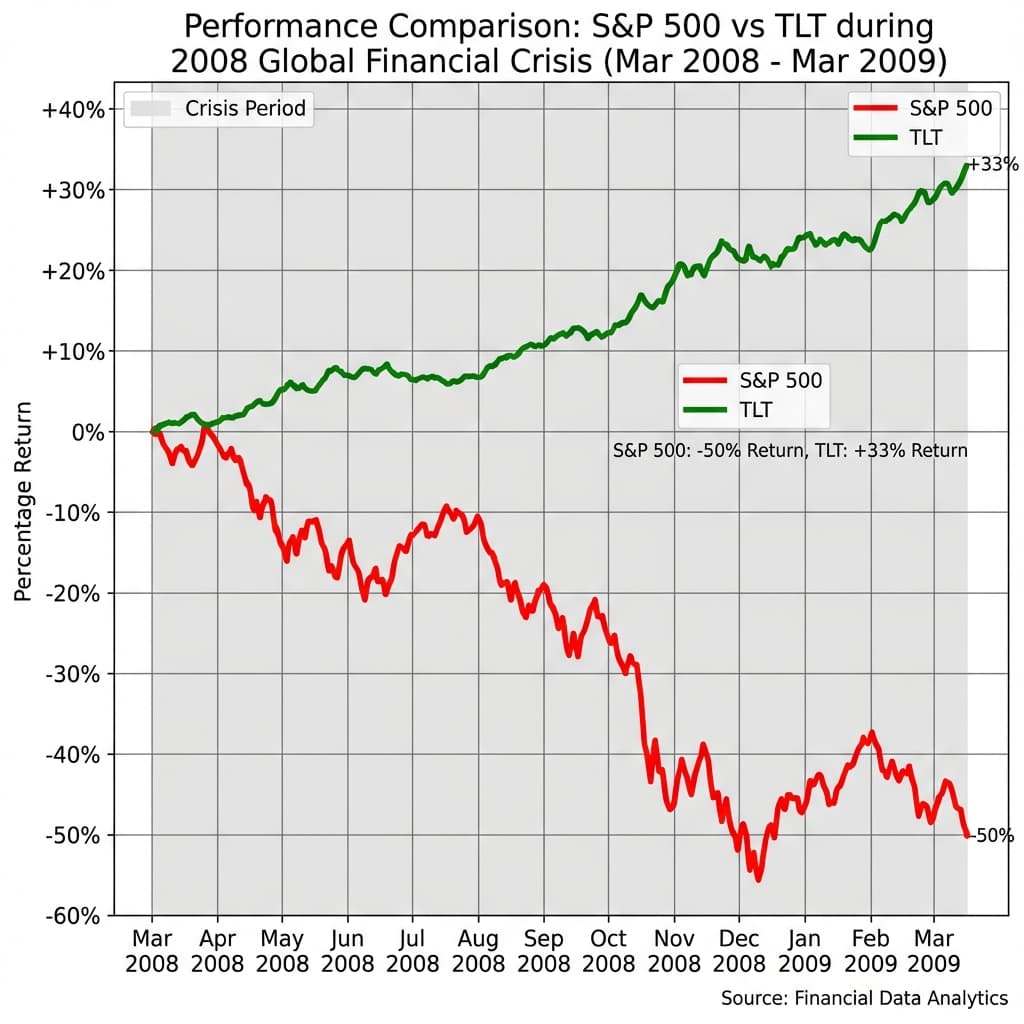
2008 Financial Crisis: S&P 500 vs TLT Performance
Adding 10~20% $TLT to a stock-heavy portfolio can significantly reduce drawdowns in extreme downside scenarios.
Suitable for:
- Concentrated equity investors: Especially in tech or growth stocks
- Volatility managers: Those seeking to reduce portfolio volatility
Part 8. 2026 Monitoring Checklist
Signals that would invalidate the $TLT thesis:
8.1 Red Flags (Sell Signals)
- BEI breaks 3%: 10-year inflation expectations persistently exceed 3%
- Unemployment returns to 3%s: Labor market overheats, Fed pivots hawkish
- Dot Plot reversal: Fed projections shift to rate hikes
- Auction failures: Bid-to-Cover Ratio persistently falls below 1.5
8.2 Green Lights (Buy More Signals)
- Unemployment breaks 4.8%: Labor weakness increases odds of Fed cuts
- PCE hits 2%: Inflation target achieved, giving Fed more flexibility
- Stock market corrects 10%+: Flight-to-quality mentality strengthens
- YCC discussion formalizes: Fed or Treasury mentions YCC possibility
Part 9. The Essence of Contrarian Investing
9.1 The Opposite Side of Crowd Psychology
As of December 2025, market sentiment toward $TLT is deeply negative. Headlines scream "bonds are dead," "deficits will push rates to 5%," and "inflation reignition."
But history shows a clear pattern. The best investment opportunities arise "when everyone is pessimistic."
Historical Examples:
- 2008 Financial Crisis: When everyone screamed "system collapse," stocks bottomed
- 2020 Pandemic: Amid "Great Depression" fears, one of history's greatest rallies began
- 2022 Bond Massacre: After declaring "bond death," the 2023 rebound started
9.2 Rediscovering the Risk Premium
Bonds are "risk-free" assets. The probability of the U.S. defaulting on dollar-denominated debt is near zero. Stocks, by contrast, are inherently risky.
Current bond yields at 4.75% are more than double the past 10-year average (2%). Earning nearly 5% without taking risk is a historically rare opportunity.
Final Verdict: Is This the Last Chance?
The 2026 case for U.S. long-duration Treasuries can be summarized as follows:
Opportunity Factors:
- Locked income: 4.75% annual distributions
- Capital gain potential: 10~20% returns if rates fall
- Portfolio defense: Hedge effect during market corrections
- Contrarian positioning: Extreme negative sentiment = low entry point
Risk Factors:
- Bear steepening: 10~15% losses if long-term rates rise
- Duration risk: High volatility if rate direction is misjudged
- Opportunity cost: Underperformance if stocks continue rallying
Optimal Investor Profiles:
- Pre-retirees: Need for stable cash flow
- Concentrated equity investors: Need for portfolio defense
- Contrarian traders: Preference for betting against the crowd
- Rate-cut conviction: Directional bets based on macro analysis
Bottom Line:
$TLT is not a "perfect" investment. Rates could keep rising, and fiscal crises could materialize. But when calculating probabilities and expected values, the risk-reward profile looks compelling.
For investors who've endured two years of pain, and for those who can coldly seize opportunity when the crowd is gripped by fear, 2026 $TLT could be a once-in-a-cycle chance.
"Be fearful when others are greedy, and greedy when others are fearful." — Warren Buffett
Now is the time to buy fear and convert patience into returns.
Data Sources
- Federal Reserve Economic Data (FRED): Interest rates, inflation, economic indicators
- iShares BlackRock: $TLT ETF composition and duration data
- Federal Reserve Dot Plot (December 2025): Rate projections
- Robert Shiller's Online Data: Shiller CAPE Ratio
- BLS (Bureau of Labor Statistics): Employment indicators
- US Department of Treasury: Treasury issuance and auction data
Disclaimer
This content is provided for informational purposes only and does not constitute investment advice or a recommendation to buy or sell any financial instrument. All investments carry risk of principal loss, and $TLT in particular exhibits high volatility due to interest rate sensitivity. Investment decisions should be made based on your own financial situation, investment objectives, and risk tolerance, at your own discretion and responsibility. Consult with a professional financial advisor if needed.